Why Light Beer Is Back (And Better Than Ever)
For decades, light beer was the punchline of the craft revolution—watered-down, flavourless, and decidedly uncool. Then something unexpected happened: Michelob Ultra quietly became the best-selling beer in America by volume in 2025, Castle Lite cemented itself as South Africa's fastest-growing premium brand, and craft breweries everywhere started releasing their own light lagers and session IPAs. Light beer didn't just survive the craft era—it adapted, evolved, and came back stronger.
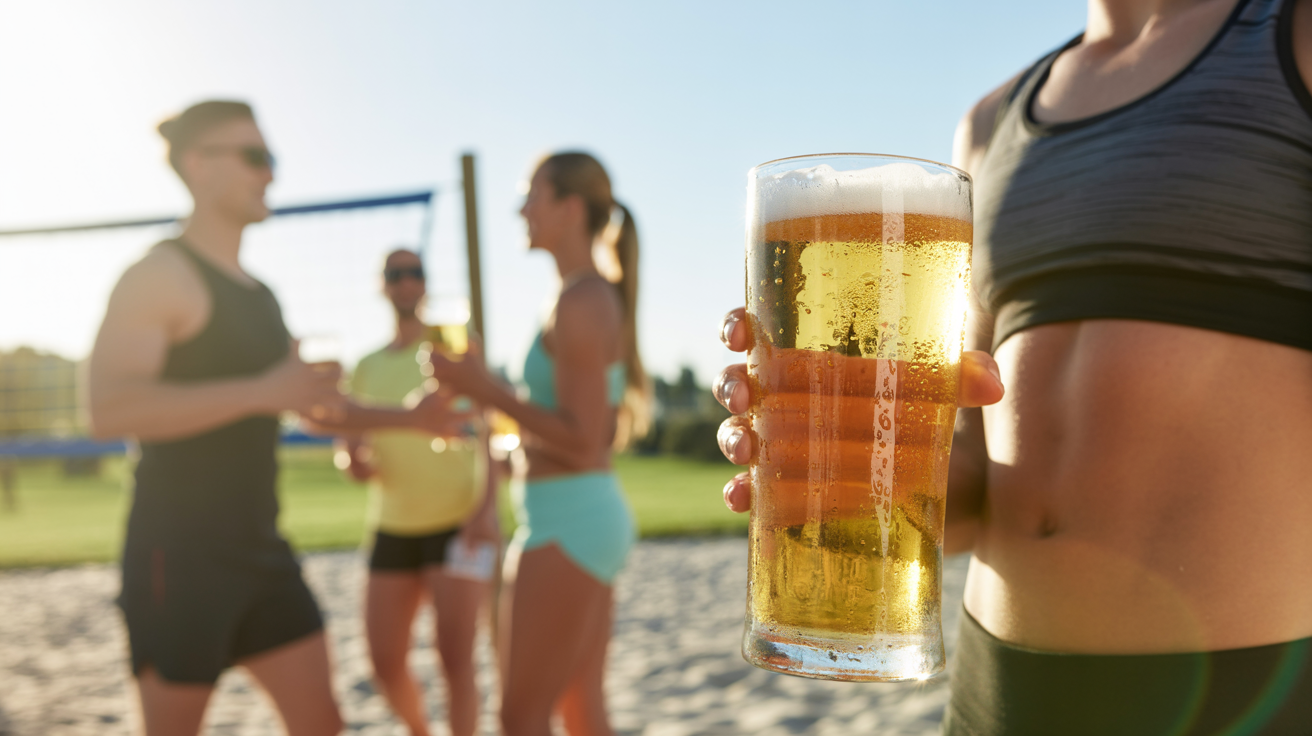
This isn't the light beer your dad reluctantly reached for on a diet. Today's light beers are brewed with genuine craft care, marketed around active lifestyles rather than calorie guilt, and consumed by a generation that wants to enjoy four beers at a braai without writing off the next morning. Here's how light beer went from "boring" to best-seller—and what South African and American drinkers are actually choosing in 2025.
From Diet Beer to Lifestyle Brand
The old pitch was simple: "Fewer calories, same great taste." Nobody bought it because nobody believed it. The new pitch is fundamentally different: "This is the beer for people who actually do things."
Michelob Ultra's transformation is the textbook case. By partnering with the NBA, PGA Tour, Team USA, and CONMEBOL Copa América, AB InBev repositioned a light lager as the drink of athletes and weekend warriors. Castle Lite did something similar in South Africa, sponsoring major music festivals and adopting the "Extra Cold" identity that made the brand about experience, not restriction.
Fitness Positioning
Light beers marketed alongside active lifestyles, not as a compromise
Cultural Sponsorships
Castle Lite Unlocks festival, Michelob Ultra x NBA partnerships
Social Signalling
Choosing light beer is now about intention, not deprivation
The Numbers: Light Beer Is Dominating
🇿🇦 South Africa
Key Driver: Urban health consciousness, "Extra Cold" premium positioning, and braai-culture sessionability.
🇺🇸 United States
Key Driver: Michelob Ultra's sports marketing, keto/low-carb diets, and craft brewery light-lager innovation.
📊 Key Stat:
Light beer options account for over 45% of total beer sales in the USA. In South Africa, the premium light segment is the fastest-growing subcategory in SAB's portfolio. The global light beer market is projected to reach USD $504.98 billion by 2033.
🇿🇦 South Africa's Best Light Beers
South Africa's light beer scene goes well beyond Castle Lite. From ultra-low-ABV options like Windhoek Light to innovative craft entrants like Darling Brew's Light Speed, there's a light beer for every occasion—from post-Parkrun at the Waterfront to an all-day braai in Pretoria.
Castle Lite
SAB (AB InBev) • Light Lager
4.0%
3.5g
100 per 330ml
💡 SA's #1 premium light beer; "Extra Cold" positioning
Windhoek Light
Namibia Breweries • Light Lager
2.4%
2.8g
75 per 330ml
💡 Brewed to Reinheitsgebot; lowest ABV mainstream option
Skinny Lager SA
SkinnyBrands • Premium Lager
4.0%
0.9g
89 per 330ml
💡 72% fewer carbs; gluten-removed & vegan
Darling Brew Light Speed
Darling Brew • Craft Light Lager
2.6%
3.2g
88 per 330ml
💡 Carbon-neutral craft brewery; floral hop notes
Amstel Lite
Heineken SA • Light Lager
2.5%
2.5g
80 per 330ml
💡 Widely available across SA retailers
🏆 Castle Lite: The SA Success Story
Introduced in 1994 as a lower-alcohol variant of Castle Lager, Castle Lite languished with poor sales until a bold 2009 repositioning that reframed light beer as confident and aspirational rather than "lightweight." The result? A 68% cumulative sales increase over three years, making it SAB's fastest-growing premium brand and a fixture at events like Castle Lite Unlocks.
The key insight: serve it "Extra Cold" at -4°C with a temperature-indicating label, and market it around experiences (music, sport, social), not diet messaging.
🇺🇸 America's Light Beer Heavyweights
The USA is the world's largest light beer market, where three brands—Michelob Ultra, Miller Lite, and Coors Light—account for over 35% of all beer consumed. But the most exciting growth is happening at the edges, where craft breweries are proving that "light" and "flavourful" aren't mutually exclusive.
Michelob Ultra
Anheuser-Busch • Light Lager
4.2%
2.6g
95 per 355ml
💡 #1 selling beer in America by volume (2025)
Miller Lite
Molson Coors • Light Lager
4.2%
3.2g
96 per 355ml
💡 Lowest calorie major national brand; won blind taste tests
Coors Light
Molson Coors • Light Lager
4.2%
5.0g
102 per 355ml
💡 "Rocky Mountain cold" branding; 2nd largest light beer
Corona Premier
Constellation Brands • Premium Light Lager
4.0%
2.6g
90 per 355ml
💡 Positioned as "elevated" light; fastest-growing import
Dogfish Head Slightly Mighty
Dogfish Head • Craft Light IPA
4.0%
3.6g
95 per 355ml
💡 Full hop flavour from monk fruit; 95 cals
Bell's Light Hearted IPA
Bell's Brewery • Craft Light IPA
3.7%
4.0g
110 per 355ml
💡 Session IPA from Two Hearted Ale lineage
👑 Michelob Ultra: How a Light Beer Became #1
In September 2025, Michelob Ultra overtook Modelo Especial to become America's best-selling beer by volume—the first light beer to hold that title since Bud Light's decline. With 95 calories and just 2.6g of carbs, it grew 15% over five years by leaning into sports sponsorships (NBA, PGA Tour, Team USA) rather than calorie counting.
The strategy: never call it a "diet beer." Call it a beer for people who run marathons, play golf, and still want a cold one after.
Light Beer vs. Everything Else: Calorie Comparison
One of the biggest drivers of the light beer comeback is simple maths. Here's how light beers stack up against other categories:
| Beer Category | Avg Calories | Avg Carbs | Avg ABV |
|---|---|---|---|
| Regular IPA | 200-280 | 12-18g | 6-7% |
| Regular Lager | 145-175 | 10-14g | 5.0% |
| Light Lager | 85-105 | 2.5-5g | 3.5-4.2% |
| Ultra-Light / Low-Carb | 55-90 | 0.5-3g | 2.4-4.0% |
| Non-Alcoholic Beer | 24-70 | 4-18g | 0.0-0.5% |
🧮 The "Four-Beer Rule"
Drinking four regular IPAs at a braai? That's roughly 900-1,100 calories—more than a Big Mac meal. Four light lagers? About 360-400 calories. For many South African and American drinkers, that maths alone is enough to make the switch.
Light Beer vs. Non-Alcoholic Beer: What's the Difference?
People often confuse light beer with non-alcoholic (NA) beer, but they serve fundamentally different purposes and target different drinkers:
🍺 Light Beer
- • ABV: 2.4%–4.2% (still alcoholic)
- • Goal: Fewer calories and carbs while still enjoying alcohol
- • Best For: All-day sessions, fitness-conscious drinkers, calorie management
- • Vibe: "I want beer, but lighter"
- • SA Examples: Castle Lite, Windhoek Light
🚫 Non-Alcoholic Beer
- • ABV: 0.0%–0.5% (effectively zero alcohol)
- • Goal: Beer taste with no alcohol at all
- • Best For: Sober-curious, designated drivers, religious observance, pregnancy
- • Vibe: "I don't want alcohol tonight"
- • SA Examples: Castle Free, Heineken 0.0
Interested in the NA beer revolution? Read our deep-dive: The Rise of Mindful Drinking: How Non-Alcoholic Beer is Changing the Game
Why Drinkers Are Switching to Light Beer
Fitness & Active Lifestyles
Gym-goers and runners want a post-workout social drink that doesn't erase their efforts. At 95 calories, Michelob Ultra fits a macro-counted diet.
Braai & All-Day Sessions
South African braais can last 6+ hours. Light beers like Castle Lite and Windhoek Light let you pace yourself without feeling bloated.
Keto & Low-Carb Diets
Skinny Lager's 0.9g carbs and Castle Lite's 3.5g carbs make them compatible with keto, Banting, and paleo diets—regular beer's 10-18g carbs won't cut it.
Value for Money
In an economy where every rand counts, light beers offer a familiar, reliable taste at a competitive price—especially compared to craft premiums.
Sessionability
Lower ABV means you stay sharper for longer. Perfect for watching the Springboks, tailgating, or an afternoon on the stoep.
Better Brewing Technology
Modern enzyme treatments, monk fruit sweeteners, and specialized yeasts create full flavour at lower calories—not the watery taste of old.
The Craft Revolution Goes Light
Perhaps the most telling sign of light beer's legitimacy? Craft breweries are now making them. In 2019, only 10% of US craft breweries offered a light beer. By 2024, that number hit 30%. In South Africa, Darling Brew, Devil's Peak, and Jack Black have all experimented with session-weight and light offerings.
What Makes a Good Craft Light Beer?
✅ What to Look For:
- • Full hop aroma with reduced bitterness
- • Monk fruit or stevia to add body without carbs
- • Session-weight ABV (3.5–4.2%) that doesn't taste thin
- • Proper malt backbone even at lower gravity
⚠️ Red Flags:
- • Just watered-down flagship with no recipe adjustment
- • "Light" label on a 5%+ beer that's only marketing
- • Missing nutritional info (good brands are transparent)
- • Artificial sweeteners used to mask thin body
The Bottom Line: Light Beer Earned Its Comeback
Light beer's revival isn't a marketing trick—it's a response to how people actually drink in 2025. Fitness culture, braai sessionability, low-carb diets, better brewing tech, and smart positioning have transformed light beer from the embarrassing choice into the intentional one. Whether you're reaching for a Castle Lite at a Joburg rooftop bar or cracking a Michelob Ultra after a trail run in Colorado, you're part of a global shift that shows no signs of slowing down.
🎯 Key Takeaways
- ✅ Light beer now commands 45%+ of US beer sales and is SA's fastest-growing premium segment
- ✅ Michelob Ultra became America's #1 beer by volume in 2025
- ✅ Castle Lite grew 68% in three years after repositioning around experiences, not dieting
- ✅ 30% of US craft breweries now offer light beer options (up from 10% in 2019)
- ✅ Modern brewing tech delivers genuine flavour at 85-105 calories
- ✅ Light beer is NOT non-alcoholic beer—they serve different purposes
Ready to Try South Africa's Best Light Beers?
Explore our reviews of Castle Lite, Windhoek Light, and craft light lagers from SA's top breweries.
Browse Beer ReviewsFrequently Asked Questions
Is light beer healthier than regular beer?
Light beer typically has 30-40% fewer calories and 50-75% fewer carbohydrates than regular beer, making it a better choice for calorie-conscious drinkers. However, it still contains alcohol, so moderation is key.
What's the difference between light beer and non-alcoholic beer?
Light beer still contains alcohol (typically 2.4-4.2% ABV) with reduced calories and carbs. Non-alcoholic beer has 0.0-0.5% ABV and targets people avoiding alcohol entirely. They serve different purposes.
What is the best light beer in South Africa?
Castle Lite is the most popular, but for the lowest calories, try Windhoek Light (75 cal). For the lowest carbs, Skinny Lager SA (0.9g) is the standout. Darling Brew Light Speed is the top craft option.
Can I drink light beer on a keto diet?
Yes—many light beers have under 3g of carbs per serving. Skinny Lager (0.9g carbs), Michelob Ultra (2.6g carbs), and Corona Premier (2.6g carbs) are all keto-compatible in moderation.
Why did Michelob Ultra become so popular?
Michelob Ultra positioned itself as a lifestyle brand for active people rather than a "diet beer." Sponsorships with the NBA, PGA Tour, and Team USA, combined with 95 calories and 2.6g carbs, made it aspirational rather than restrictive.