Key Takeaways
- •The South African Breweries (SAB), founded in Johannesburg in 1895, is the country’s dominant brewer and has been part of AB InBev since 2016
- •SAB’s core brands include Castle Lager, Castle Lite, Carling Black Label (“Zamalek”), Hansa Pilsener and Castle Milk Stout
- •Heineken South Africa — owner of Amstel and, via Distell and Namibia Breweries, a huge cider and Windhoek portfolio — is the main national challenger
- •More than 200 independent craft breweries now operate across all nine provinces
- •Mitchell’s in Knysna (1983) is widely credited as South Africa’s first modern microbrewery
- •The Western Cape, Gauteng and KwaZulu-Natal hold the densest concentrations of breweries and taprooms
When people search for “South African breweries,” they usually mean one of two things: the enormous company called The South African Breweries — SAB — that has brewed the nation's everyday lagers for more than a century, or the wider landscape of everyone who brews beer in this country. This guide covers both, because you cannot understand South African beer without understanding the giant at its centre and the hundreds of small brewers working in its shadow.
I have spent more than three decades around this industry, and the single most important thing to grasp is scale. One company brews the overwhelming majority of the beer South Africans drink. A second, Heineken, brews most of the rest. And then, almost as a rounding error by volume but a giant in cultural terms, sit the craft breweries. Let me take them in turn.
The South African Breweries (SAB): The Giant
The South African Breweries was founded in 1895 to serve the thirsty mining crowds of a booming Johannesburg. In 1895 it launched Castle Lager, a beer still on shelves today — making it one of the oldest continuously produced beer brands in the country. Within a few years SAB was listed on the Johannesburg Stock Exchange, and it spent the next century growing into a colossus.
In 2002 the company bought Miller in the United States and became SABMiller, at one point the second-largest brewing group on the planet. Then, in 2016, the story turned again: Anheuser-Busch InBev — the world's largest brewer — acquired SABMiller in one of the biggest corporate deals in history. Today SAB operates as AB InBev's South African business, still running its historic breweries and still brewing the same familiar brands.
If you drink a mainstream beer in South Africa, the odds are overwhelming that SAB brewed it. Its lineup is the backbone of the market:
- Carling Black Label — the country's best-selling beer, affectionately nicknamed “Zamalek.” A strong, no-nonsense lager with a devoted following.
- Castle Lager — the heritage brand, a crisp lager that has been brewed since 1895 and sponsors much of South African sport.
- Castle Lite — the extra-cold, lower-calorie lager that dominates the premium light segment.
- Hansa Pilsener — a hoppier, more bitter pilsner-style beer popular in coastal regions.
- Castle Milk Stout — a dark, smooth, slightly sweet stout with a loyal base.
- Flying Fish — a flavoured, lemon-and-lime style lager aimed at younger, crossover drinkers.
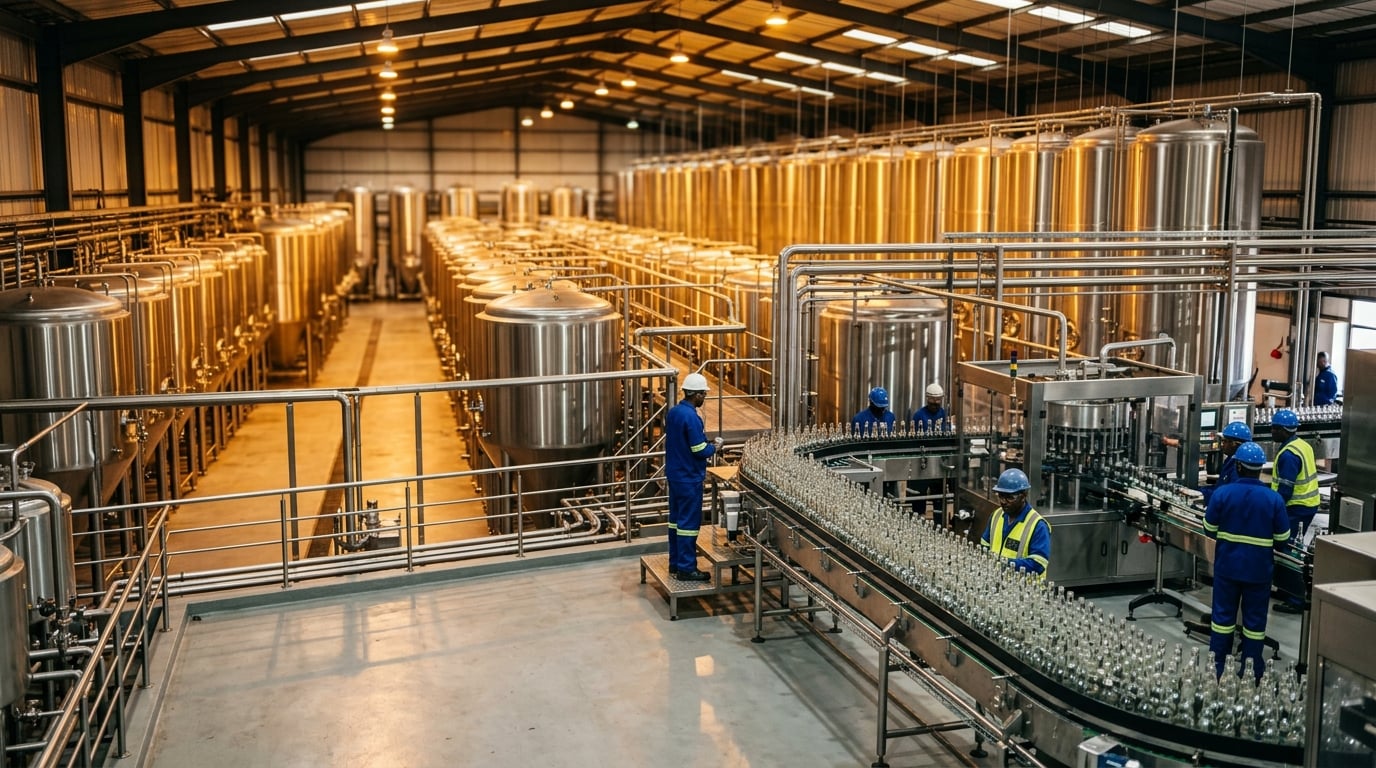
SAB also brews or distributes AB InBev's global brands locally, including Budweiser, Stella Artois and Corona, and it runs large breweries in cities such as Johannesburg (Rosslyn/Alrode), Ibhayi in Gqeberha, and Prospecton in Durban. When people ask about “South African Breweries products,” this portfolio is the answer.
Heineken & Namibia Breweries: The Challenger
For decades SAB had the market almost to itself. That changed as Heineken built a serious South African operation. Heineken now brews and sells its flagship green-bottle lager here alongside Amstel, and it dramatically expanded its local footprint by acquiring Distell — the Stellenbosch drinks group behind Savanna and Hunter's ciders — and taking control of Namibia Breweries.
That last acquisition matters for beer drinkers because it brought Windhoek Lager and Windhoek Draught firmly into the Heineken stable. Windhoek is brewed according to the German Reinheitsgebot purity law — water, malt, hops and yeast, nothing else — and has a passionate following among South Africans who want a cleaner, all-malt lager. Tafel Lager, another Namibian brand, sits in the same portfolio.
Between them, SAB and Heineken account for the vast majority of beer sold in South Africa. If you are standing in a bottle store, almost everything in the fridge traces back to one of these two companies. Which makes the third group all the more remarkable.
The Craft Breweries: The Independents
South Africa's craft beer story is young but energetic. The generally accepted starting point is 1983, when Lex Mitchell opened Mitchell's Brewery in Knysna — the country's first modern microbrewery. For years it was a lonely pioneer. Then, from around 2010, the scene exploded. Today there are well over 200 independent craft breweries operating across every province.
The heartland is the Western Cape, where names like Devil's Peak, Jack Black, Darling Brew and Cape Brewing Company (CBC) built the modern reputation of South African craft. Gauteng is a close second, home to the likes of Mad Giant, Ukhamba, Soul Barrel and the taprooms clustered around Johannesburg and Pretoria. KwaZulu-Natal has a distinctive scene built around the Midlands and the Durban coast.
Craft brewers compete on flavour and identity rather than volume: hop-forward IPAs, barrel-aged stouts, weiss beers, and increasingly a wave of brewers working with indigenous ingredients such as rooibos, honeybush and sorghum. They will never out-brew SAB, and they do not try to. Their role is to give South African beer its variety, its regional character, and its sense of place.
For a full picture, browse our breweries directory, which breaks the country down province by province, or read our guide to the hidden-gem breweries worth a detour.
The Fourth Pillar: Sorghum & Traditional Beer
There is a fourth category that international beer maps often miss entirely: commercial sorghum beer. Brands such as Ijuba and Chibuku brew opaque, lightly fermented sorghum beer — the industrialised descendant of homemade umqombothi. Sold in cartons and drunk fresh, still gently fermenting, this is genuine mass-market beer with deep cultural roots.
It is easy to overlook because it rarely appears in craft bars or premium fridges, but sorghum beer represents an enormous volume of what South Africans actually drink. Any honest account of “South African breweries” has to include it.
Who Really Runs South African Beer?
Put the pieces together and the structure is clear. Two multinationals — AB InBev (through SAB) and Heineken — control the great bulk of the market. A large, culturally vital sorghum-beer segment sits alongside them. And a spirited community of 200-plus independents supplies the flavour, experimentation and local pride.
For drinkers, this is actually a healthy picture. You can pick up a reliable Castle or Black Label almost anywhere in the country for very little money; reach for a Windhoek when you want something all-malt; hunt down a barrel-aged stout from a Cape Town taproom on a Saturday; and share a carton of Ijuba at a family gathering the next day. Few countries offer that range. If you want to taste the independent end of that spectrum, start with our beer reviews and Beer 101 guide.
Continue Reading
Frequently Asked Questions
What is The South African Breweries (SAB)?
Who owns South African Breweries now?
What are the biggest beer brands in South Africa?
Are there other big breweries besides SAB?
How many craft breweries are in South Africa?
Where can I visit a South African brewery?
Related Articles
South Africa's Closed Breweries: What We Lost
Remembering the SA breweries that shuttered and the lessons their closures leave behind.
Read moreHidden-Gem Breweries Across South Africa's Provinces
The independent breweries worth a detour, province by province.
Read moreCastle Lager Heritage: 130+ Years of South African Beer
The story of the brand that built The South African Breweries.
Read more