
Key Takeaways
- •The 30-litre keg is South Africa’s standard draught format; 50-litre for busy bars, 5-litre mini-kegs and 19–20L corny kegs for home
- •A 30-litre keg pours roughly 88 half-litre beers
- •Most commercial kegs are sold on a refundable deposit-and-return basis
- •A proper draught pour needs CO2 gas and a regulator — party air-pumps oxidise beer within a day
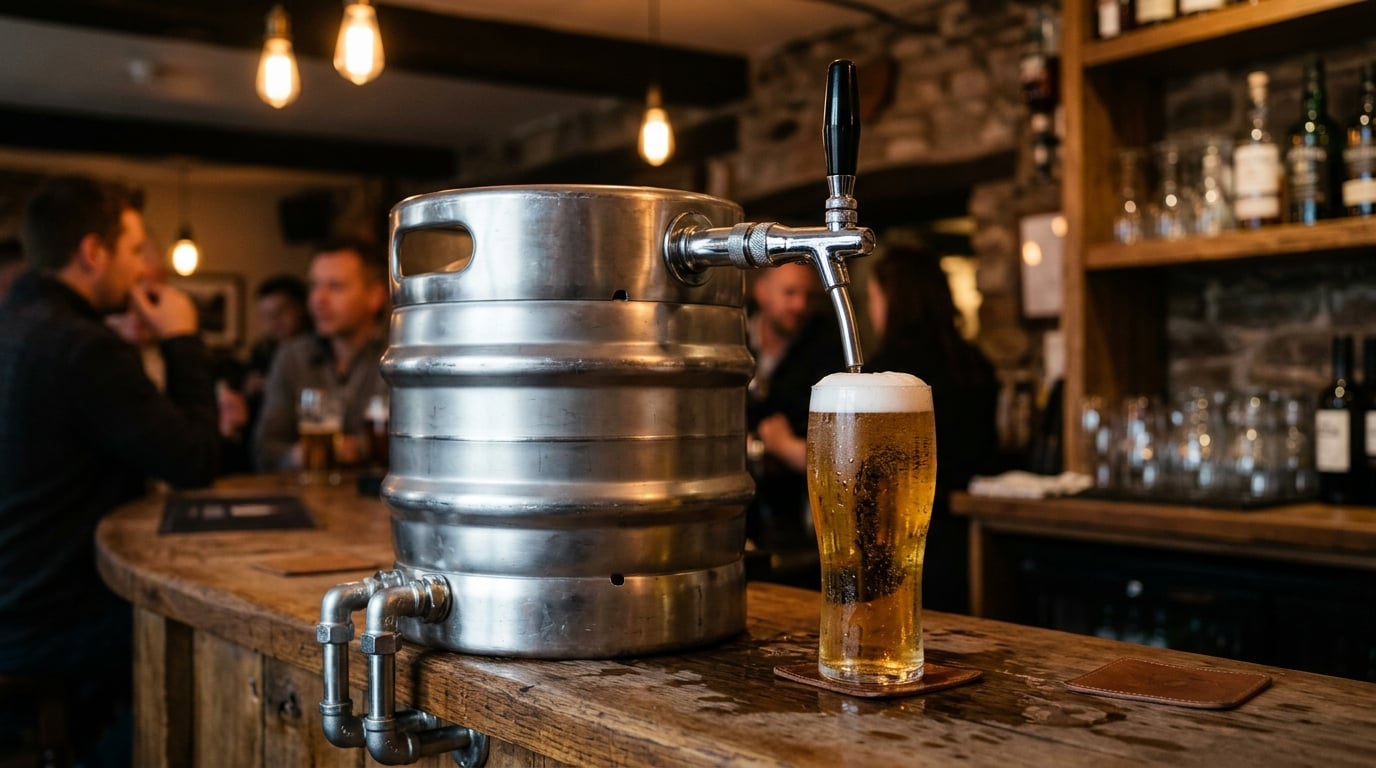
- •A kegerator is a fridge built to hold a keg and pour through a tap or beer tower
- •For regular draught drinkers and homebrewers, a kegerator pays for itself and keeps beer fresh for weeks
There is something about beer on tap. The pour, the foam, the freshness — a well-kept draught beer beats a bottle every time. For years that experience belonged to pubs. Not anymore. Kegs, taps and affordable draught machines have made it entirely realistic to pour proper draught beer at home in South Africa, whether you are serving a commercial lager at a braai or dispensing your own homebrew.
This is the guide I wish I had when I set up my first home tap. I will explain keg sizes and types, how to buy or rent a keg of beer, the difference between taps, draught machines and kegerators, and how the gas works. If you have just started brewing your own beer, this is your natural next upgrade.
Keg Sizes & Types Explained
“Keg” covers several very different containers. Knowing which is which saves you money and frustration.
- 30-litre keg — the South African workhorse. This is what most bars and restaurants run, and what you will usually be offered when you ask for a keg of a commercial brand. It pours about 88 half-litre glasses.
- 50-litre keg — the big one, used in high-volume venues. Heavy and awkward for home use.
- Cornelius (“corny”) kegs, 19–20 litre — originally soft-drink containers, now the darling of homebrewers. Easy to fill, clean and connect with simple fittings.
- 5-litre mini-kegs — fridge-sized, often with a built-in tap, ideal for casual home use and gifting. Some craft brands sell beer in these.
Commercial kegs also differ by the coupler (the fitting on top). South Africa most commonly uses the “S-type” (Sankey) coupler, but check before you buy a tap — a coupler that does not match your keg is a common and annoying mistake.
Buying or Renting a Keg of Beer
You can buy kegs of commercial beer through licensed bottle stores, beverage wholesalers and many breweries directly. The important thing to understand is the deposit-and-return model: the beer-filled keg is sold to you, but the steel keg itself remains the brewer's property. You pay a refundable deposit and get it back when you return the empty. Never treat a commercial keg as yours to keep or modify.
Prices vary by brand, size and outlet, and change over time, so I will not quote figures that will be out of date next month — phone your local outlet or the brewery for a current quote on both the beer and the deposit. Craft breweries are often the friendliest option: many will fill a keg for an event and rent you the tap and gas to go with it.
For a party, renting a complete keg-plus-tap package is usually the simplest route. For ongoing home use, buying your own dispensing equipment and just replacing the beer makes far more sense.
Taps, Draught Machines & Kegerators
This is where people get confused, so let me lay out the options from simplest to most serious.
Keg tap / coupler
The basic fitting that connects to the keg and lets you pour. A hand-pump party tap uses air and is fine for a single session. A gas coupler uses CO2 for a cleaner, longer-lasting pour.
Draught (beer) machine / dispenser
A draught beer machine is a countertop unit that holds a keg and cools it as it pours. These are convenient plug-and-play devices — some are designed around specific mini-keg formats, others take standard kegs. Great if you want draught without converting a fridge.
Kegerator & beer tower
A kegerator is the home-bar dream: a refrigerator built (or converted) to hold one or more kegs, with a beer tower or tap mounted on top. Beer stays cold and carbonated for weeks, and you pour a fresh pint whenever you like. A multi-tap tower lets you run several beers at once. This is the setup most serious homebrewers and home-bar owners end up with.
Gas, Temperature & the Perfect Pour
Three things separate a great home pour from a glass of foam:
- CO2 pressure. A CO2 cylinder and regulator push the beer and keep it carbonated. Set the pressure correctly for your beer and line length — too high and you get foam, too low and you get a flat, slow pour.
- Temperature. Draught beer pours best cold and stable, around 3–5°C. Warm beer foams. This is why a proper kegerator or cooled dispenser matters.
- Clean lines. Beer lines must be cleaned regularly. Neglected lines build up residue that ruins flavour and pour quality — the most common reason home draught beer disappoints.
Get those three right and you will pour beer at home as good as any bar. If you are dispensing your own homebrew, kegging also lets you carbonate the beer with gas rather than priming sugar, giving you precise control over the fizz.
Continue Reading
Frequently Asked Questions
What sizes do beer kegs come in?
Where can I buy or rent a keg of beer in South Africa?
What is the difference between a keg tap and a draught machine?
Do I need gas (CO2) to pour draught beer?
What is a beer tower?
Is a kegerator worth it for home use?
Related Articles
Home Brewing in South Africa: Kits & Ingredients
The complete beginner's guide to brewing your own beer at home in South Africa.
Read moreSouth African Breweries: The Complete Guide
Who brews South Africa's beer — from SAB to 200+ craft breweries.
Read moreWhere to Buy Craft Beer in South Africa 2026
The best bottle stores, online shops and taprooms for buying craft beer.
Read more