
Key Takeaways
- •Brewing beer at home for personal use is completely legal in South Africa — no licence needed
- •Start with a malt-extract kit, not all-grain: it is cheaper, simpler and far more forgiving
- •Beer needs only four ingredients — water, malt, hops and yeast
- •Sanitation is the single most important skill; most failed batches come from contamination, not bad recipes
- •A first batch takes about 3–4 weeks from brew day to your first pint
- •South Africa has well-stocked homebrew suppliers in every major city that ship nationwide
Home brewing is having a real moment in South Africa. Craft beer opened people's eyes to what beer could taste like, and a good number of drinkers decided they wanted to make it themselves. The good news: it is genuinely easy to start, it is legal, and your first batch will cost less than a decent night out. Let me walk you through it the way I would if you were standing in my kitchen.
This guide is for the complete beginner. I will cover the kit you should buy, the ingredients you need, where to find them in South Africa, and a step-by-step of your first brew day. If you have read our Beer 101 guide, you already understand what beer is — now you are going to make some.
Choosing Your First Beer Brewing Kit
Walk into any homebrew shop and you will face a choice between two worlds: extract kits and all-grain systems. For your first brew, the answer is simple — buy an extract starter kit. Here is why.
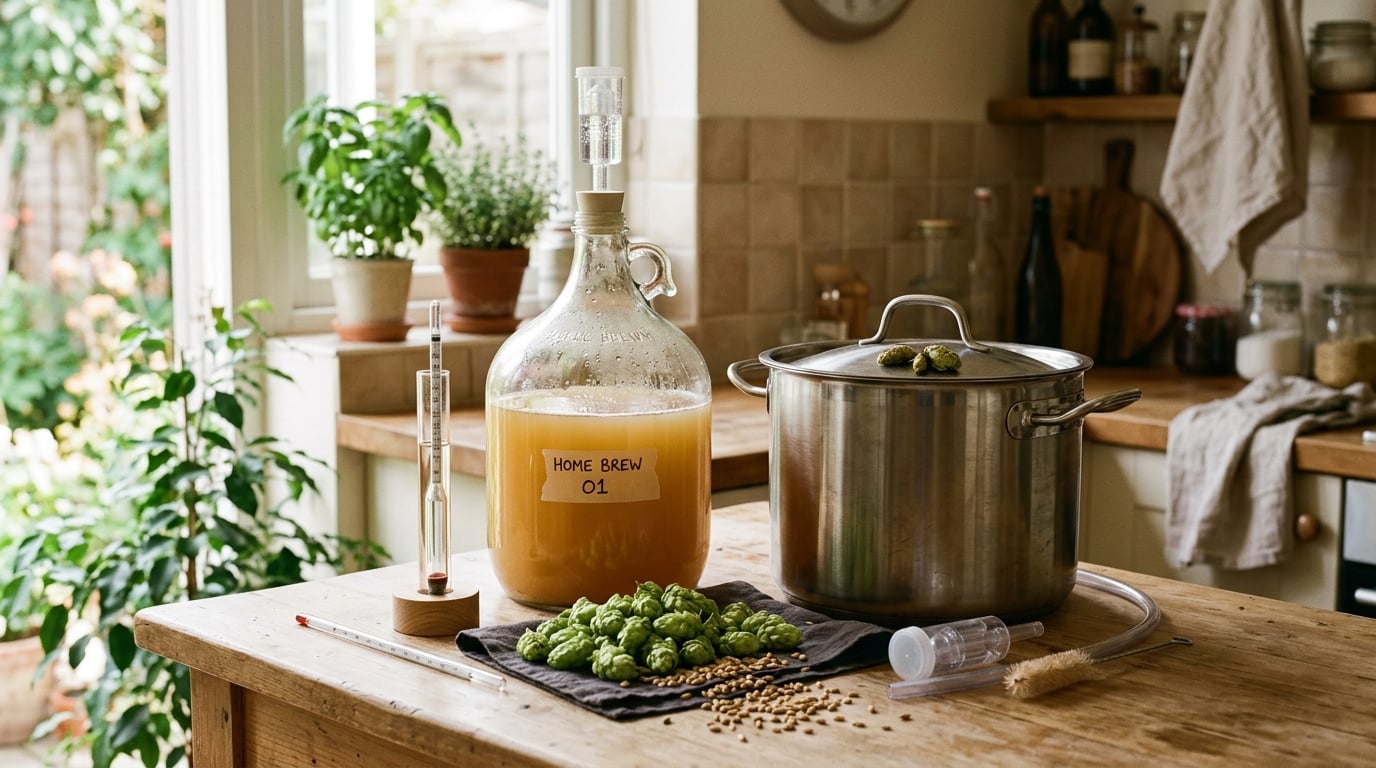
A malt-extract starter kit does the hardest part of brewing for you. The malt has already been mashed and concentrated into a syrup or dried powder, often pre-hopped. A typical beginner kit includes:
- A food-grade fermenter (usually 25–30 litre) with a sealed lid and an airlock
- A can or two of hopped malt extract — effectively “beer concentrate”
- A sachet of brewing yeast
- A hydrometer and test jar to measure alcohol strength
- Sanitiser, a stirring spoon, and a siphon or tap
An all-grain system, by contrast, has you mashing crushed malted barley yourself, controlling temperatures, and running a full boil. It gives you total creative control and is where the hobby eventually leads — but it needs more equipment, more time, and more knowledge. Do not start there. Nail two or three extract batches first, then upgrade.
If you want the traditional route instead of a Western-style ale, a homemade approach to umqombothi uses sorghum and maize rather than a kit — a completely different and wonderfully South African place to begin.
The Four Ingredients: Malt, Hops, Yeast, Water
Every beer in the world — from a Castle Lager to a barrel-aged imperial stout — is built from the same four ingredients. Understanding them is understanding beer.
Malt
Malt is barley (or another grain) that has been germinated and kiln-dried. It provides the sugars that yeast ferments into alcohol, plus the body, colour and much of the flavour. As a beginner you will use malt extract; later you may graduate to whole grains. Lighter malts make pale, crisp beers; darker, roasted malts make ambers, browns and stouts.
Hops
Hops are the green cones that give beer its bitterness, and its floral, citrus or piney aroma. They also act as a natural preservative. If you buy hops for beer separately, you will see them sold as pellets or dried cones, each with an alpha-acid percentage that tells you how bitter they are. South African-grown hops from the George region in the Southern Cape — varieties like Southern Passion and African Queen — have become sought-after around the world.
Yeast
Yeast does the actual work of turning sugar into alcohol and carbon dioxide. Ale yeasts ferment warm and fast; lager yeasts ferment cool and slow. Dried yeast sachets are perfect for beginners — cheap, reliable and easy to store.
Water
Beer is mostly water, so it matters more than people expect. For your first few batches, clean municipal tap water that tastes good to drink is fine — just let it stand or use a carbon filter to remove chlorine. As you advance you can adjust the water's mineral profile to suit different beer styles.
Your First Brew Day, Step by Step
Here is a beginner extract brew from start to finish. Set aside a relaxed afternoon.
- Sanitise everything. This is the golden rule. Any equipment that touches your beer after the boil must be sanitised. More batches are ruined by contamination than by any other cause.
- Dissolve the extract. Warm a few litres of water, stir in the malt extract until fully dissolved, and — if your kit calls for it — bring it to a short boil, adding any hops per the instructions.
- Top up and cool. Pour the hot wort into your sanitised fermenter and top up with cold water to the target volume. Cool it to around 20–24°C for an ale.
- Take a hydrometer reading. Record the original gravity — this lets you calculate the final alcohol content.
- Pitch the yeast. Sprinkle in the yeast, seal the lid, and fit the airlock with a little water in it.
- Ferment. Move the fermenter somewhere dark and temperature-stable. Within a day you should see the airlock bubbling. Leave it for one to two weeks until bubbling stops and the gravity is stable.
- Bottle or keg. Add a measured amount of priming sugar, transfer into sanitised bottles (or a keg), seal, and leave at room temperature for one to two weeks to carbonate.
- Chill and enjoy. Refrigerate, pour carefully to leave the yeast sediment behind, and drink your own beer.
Where to Buy Kits & Ingredients in South Africa
South Africa has a well-established homebrew supply network. Dedicated homebrew shops operate in and around Cape Town, Johannesburg, Pretoria and Durban, and most run online stores that ship nationwide by courier. Between them they stock starter kits, malt extract and whole grains, local and imported hops, dried and liquid yeast, fermenters, bottles and kegging gear.
A few practical tips when you shop:
- Buy a complete starter kit for your first purchase rather than assembling parts — it guarantees you have everything.
- Buy fresh yeast and store it in the fridge; old or heat-damaged yeast is a common cause of a stuck fermentation.
- Get more sanitiser than you think you need. You will use it constantly.
- Ask questions. South African homebrew shop owners are almost always brewers themselves and love helping beginners.
Once you have a few batches under your belt, our guide to beer kegs, taps and home draught systems covers the natural next upgrade: pouring your own beer on tap instead of bottling.
Continue Reading
Frequently Asked Questions
Is it legal to brew beer at home in South Africa?
What is the best beer brewing kit for beginners?
What ingredients do I need to brew beer?
Where can I buy home brewing kits and ingredients in South Africa?
How long does it take to brew beer at home?
Can I brew traditional South African beer at home?
Related Articles
Beer Kegs, Taps & Draught Systems in South Africa
A buyer's guide to kegs, taps and home draught systems — the natural next step after bottling.
Read moreHow to Brew Umqombothi Safely at Home
Step-by-step guide to brewing traditional sorghum beer safely at home.
Read moreSouth African Breweries: The Complete Guide
Who brews South Africa's beer — from SAB to 200+ craft breweries.
Read more