Castle Lager Calories: Full Nutrition Breakdown for Every Serving
A 340ml Castle Lager is about 156 kcal at 5.0% ABV — higher than Castle Lite, lower than most craft IPAs. Here is the full breakdown across every serving size sold in South Africa.
Key Takeaways
- •A 340ml Castle Lager is approximately 156 kcal at 5.0% ABV
- •A 440ml can is about 202 kcal; a 500ml serving about 230 kcal; a 750ml quart about 345 kcal
- •Castle Lite is roughly 102 kcal per 340ml — about 54 kcal less than Castle Lager
- •Beer calories come from just two sources: alcohol (7 kcal/g) and residual carbohydrates (4 kcal/g)
- •Three 340ml Castles at a braai add up to roughly 468 kcal and about 40 g of alcohol
- •At South Africa’s 0.05% driving limit, three Castles in two hours is already at or past the threshold
“How many calories in a Castle?” is one of the most common questions we get — usually asked at a braai, usually after the third one, usually with genuine anxiety about Monday morning. The honest answer is: it depends on what size you are holding. A dumpy is not a quart. A draught pint is not a 500ml can.
So instead of the vague “about 140 calories” you see everywhere else, this is the full breakdown from the label-derived figures in our own beer facts database, which tracks 814 SA and imported beers — with the maths of what three Castles at a Saturday braai actually add up to.
The numbers at a glance
Here is how Castle Lager compares to the other lagers you will find in every SA fridge, using the per-100ml figures recorded in our database.
| Beer | Serving | ABV | Calories (kcal) | Carbs (est.) |
|---|---|---|---|---|
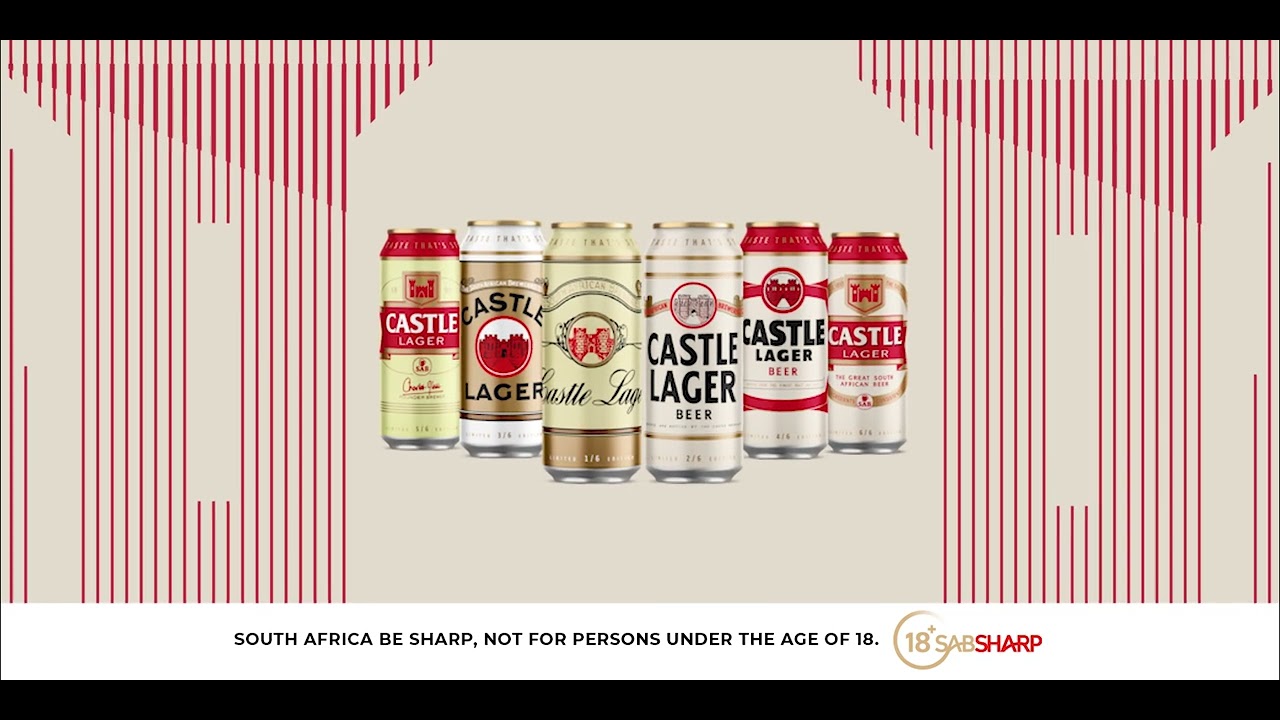
| Castle Lager | 340ml bottle | 5.0% | ~156 | ~12–15 g |
| Castle Lite | 340ml bottle | 4.0% | ~102 | ~5–8 g |
| Carling Black Label | 340ml bottle | 5.5% | ~156 | ~12–15 g |
| Hansa Pilsener | 340ml bottle | 4.5% | ~138 | ~11–14 g |
| Windhoek Lager | 330ml bottle | 4.0% | ~139 | ~11–14 g |
| Lion Lager | 340ml bottle | 4.0% | ~122 | ~10–13 g |
Calorie figures are derived from the per-100ml values in our beer database; carbohydrate figures are estimates calculated from the calorie and alcohol content, not official SAB carb specs. Beer nutrition can shift quietly during a reformulation, so treat these as close reference points and check the current label for absolute precision. For the full sortable list, see our complete beer facts hub.
Where the calories in beer actually come from
Two sources, and only two: alcohol and carbohydrates. Alcohol carries 7 kcal per gram — sitting between carbohydrate (4 kcal/g) and fat (9 kcal/g). That is why higher-ABV beer is almost always higher-calorie beer, all else being equal. The second source is residual carbohydrate: fermentable sugars the yeast did not fully convert, plus a small amount of protein and trace compounds. What survives the yeast is what shows up on the label as carbs.
Fermentation is basically yeast eating sugar. The brewer's job is to control which sugars get eaten and which do not, because those unfermented sugars are what carry body, sweetness and, yes, calories. A drier lager with fewer residual carbs will be lower in calories than a maltier one at the same ABV.
Worked example for Castle Lager at 340ml, 5% ABV: roughly 13.4 g of pure alcohol, delivering about 94 kcal from alcohol alone, plus roughly 60 kcal from the residual carbohydrates — landing at the ~156 kcal total. “Light” or “lite” beers cut calories by cutting either the ABV or the residual carbs. There is no magic. Just less of the things that carry the calories.
Castle Lager vs Castle Lite — which should you pick?
The trade-off is straightforward. Castle Lager gives you more body, a fuller malty finish, and a slightly more assertive bitterness on the back end. Castle Lite trades some of that character for roughly 54 fewer kcal per 340ml bottle and 1% less alcohol. That is real, and it is the whole point of it.
Worth being fair about one thing: Castle Lite has been genuinely engineered to deliver as much of the parent beer's character as possible at the lower ABV. It is not a watered-down Castle Lager; it is a separately-formulated beer that shares the family. Neither one is “wrong”. If you are at a two-hour lunch braai in January heat and want to still be conversational at the end of it, the lower-alcohol Lite is the sensible call. If you are settled in for a rugby test and only planning one, the Lager rewards it.
For the full sensory breakdown, read our full Castle Lager review and check the Castle Lite spec sheet for the exact numbers.
Calories across serving sizes
The 340ml figure is the reference point, but nobody drinks in reference points. Here is how the numbers scale across the containers you will actually encounter, from the classic dumpy to a full quart.
| Serving | Volume | Calories (kcal) | Alcohol (g) |
|---|---|---|---|
| Dumpy bottle | 340ml | ~156 | ~13.4 g |
| Standard can | 440ml | ~202 | ~17.4 g |
| Quart | 750ml | ~345 | ~29.6 g |
| Draught pint (SA) | 500ml | ~230 | ~19.7 g |
| Draught small | 250ml | ~115 | ~9.9 g |
A note on draught: pours in SA are often generous — a “pint” in most sports bars is 500ml, not the imperial 568ml you would get in a London pub. That is calories you might not be counting. Pace accordingly.
How Castle compares to craft IPAs
Here is where the maths gets interesting. The bigger the ABV, the more calories per millilitre — almost always. A 6.5% Cape craft IPA at 500ml will typically land around 240–260 kcal (an estimate from its ABV and typical malt bill), notably more than a 340ml Castle at 5%. That is not a knock on IPAs — it is chemistry. More alcohol plus more residual malt sugar (IPAs are usually maltier by design, to balance the hop bitterness) equals more calories in the glass.
So if you are at a craft beer festival trying to sample five or six things, share a taster board rather than committing to five full pints. Our braai-season SA IPA picks cover the pairing side of this, and the King's Blockhouse IPA review gives you the tasting detail on Cape Town's benchmark IPA.
The braai maths — what three Castles add up to
Let us do the arithmetic everyone silently does at the third beer. Three 340ml Castles is roughly 468 kcal — about the same as a full boerewors roll with tomato-and-onion relish and a smear of mustard, before you have eaten anything.
Which brings the honest observation: it is almost never the beer that gets you at a braai. It is the boerewors, the pap, the potato salad, the second helping of chops. Beer calories are real but they are rarely the biggest number on the day. If you are counting, count what is on the plate too, not just what is in the glass.
The other reason to slow down at three is not calories — it is the SA driving limit. South Africa's 0.05% blood-alcohol limit means three Castles in two hours for an 80kg adult is already at or past the threshold. That is the more important number. If you are driving home, one Castle across a long braai is your ceiling, and a Castle Lite makes that maths a little safer. For pacing and food pairing that keeps you drinking slowly, see our beer & braai pairings guide.
Beer vs wine, briefly
Per standard serving, a 340ml Castle Lager (~156 kcal) and a 150ml glass of dry red wine (~120 kcal) are closer than people assume. Wine is higher-calorie per millilitre, but the serving is smaller. Over a long dinner the totals tend to converge — so the “wine is lighter” assumption does not really hold once you count how much of each you actually drink.